 Intelligent Data and Systems with Applications (IDSA)

Research Focus
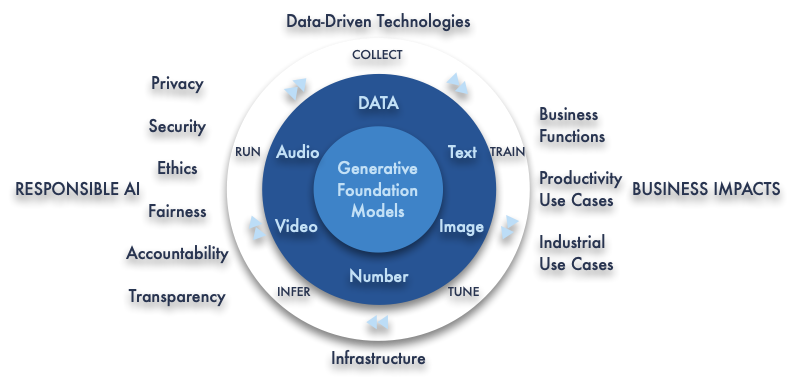
The IDSA research group focuses on innovative data intelligence and computational intelligence solutions
towards building intelligent systems and applications using data-driven technologies
with respect to information privacy and security.
Our research group explores various aspects of intelligent data and computing,
as well as software development with focus on AIOps toward Responsible AI and business impacts.
We are extending and adapting techniques of AIOps and software development to other areas
with a particular interest in education.
Keywords
Responsible AI, AIOps, AI-Assisted Systems, eHealth Informatics, Telemedicine, Human-Computer Interaction (HCI), Information Privacy and Security, Natural Language Processing (NLP), NeuroEvolution, Social Robotics, Intelligence in Education and Engineering ProcessesMembers

Giang NGUYEN
|

Ján LANG
|

Fedor LEHOCKI
|

Eduard KURIC
|

Martin KOMÁK
|

Juraj VINCÚR
|
PhD students

Ing. Oliver Udvardi
|

Ing. Alexandra Skyvová
|

Ing. Matúš Krajčovič
|
Ing. Anetta Langová
|

Ing. Oleksandr Lytvyn
|
PaedDr. Pavol Baťalík (external)
|

Ing. Jakub Perdek
|

Ing. Viktor Matovič
|
Seminars (selected)
- 2025: Software development: traditional versus AI (DevOps, MLOps, DataOps, ModelOps, LLMOps and AIOps)
- 2025: FIIT Day, FIIT Girls Day
- 2025: How to prepare a journal paper?
- 2025: Responsible AI and Frequent situations with Theses
Laboratoriums
- Simon’s Lab - classroom 1.26 (1. floor)
- Engelbert’s Lab - lab room 3.29 a, b, c (3. floor)
- e-Health Informatics Lab - lab room 3.29 d (3. floor)
- 3D Lab and Cloud - lab room 3.38 (3. floor)
- HPC Workstation AMD 32 cores, 512 GB RAM, RTX 5090+4090 GPU, SSD
- FIIT cloud of 100 cores, 200 GB RAM, HDD
Projects
- Sustainable Healthcare with Digital Health Data Competence (SUSA), 2025-2028
- Building Regional Innovation Ecosystems, 2025-2027
- Artificial Intelligence for Legal Professions (AILE), 2024-2026
- Evolving Architectural Knowledge in the Edge-to-Cloud Continuum, 2024-2028
- Model-based explication support for personalized education, 2023-2026
- Education Content Engineering Hub (ECEH), EEA and Norway Grants, 2022-2024
- International Center of Excellence for Research on Intelligent and Secure Information and Communication Technologies and Systems, 2020-2023
AI Summer Schools and Conferences (organizing)
- European Summer School on Artificial Intelligence (ESSAI), Bratislava, 2025
- International Workshop on Intelligent Computing in Engineering (EG-ICE), Glasgow, 2025
- IIT.SRC at FIIT STU
University textbooks in ELVIRA
- G. Nguyen: Introduction to Data Science, 2022
- J. Lang: Vybrané metódy inžinierskej práce, 2022
- E. Kuric: Základné metódy na zlepšenie použiteľnosti webov, 2024
- P. Baťalík: Informačné vzdelávanie, 2022
Publications (selected, Open Access, top-ranking)
- Machine Learning Operations Landscape: Platforms and Tools. Artificial Intelligence Review, 2025, Q1-decile
- Landscape of Machine Learning Evolution: Privacy-Preserving Federated Learning Frameworks and Tools. Artificial Intelligence Review, 2025, Q1-decile
- Democratizing eye-tracking? Appearance-based gaze estimation with improved attention branch. Engineering Applications of Artificial Intelligence, 2025, Q1-decile
- Is usability testing valid with prototypes where clickable hotspots are highlighted upon misclick? Journal of Systems and Software, 2025, Q1
- Unmoderated Usability Studies Evolved: Can GPT Ask Useful Follow-up Questions? International Journal of Human-Computer Interaction, 2025, Q1
- Secure Federated Learning for Multi-Party Network Monitoring. IEEE Access, 2024, Q1
- Network security AIOps for online stream data monitoring. Neural Computing and Applications, 2024, Q1
- Is mouse dynamics information credible for user behavior research? An empirical investigation. Computer Standards & Interfaces, 2024, Q1
- Effect of Low-Level Interaction Data in Repeat Purchase Prediction Task. International Journal of Human–Computer Interaction, 2024, Q1
- Cognitive abilities and visual complexity impact first impressions in five-second testing. Behaviour & Information Technology, 2024, Q2
- Differential Private Federated Learning in Geographically Distributed Public Administration Processes. Future Internet, 2024, Q2